



This issue contains the latest methods in ecology and evolution. Read to find out about this month’s featured articles and the article behind our cover!
Featured
DeepDiveR—A software for deep learning estimation of palaeodiversity from fossil occurrences
The incompleteness of the fossil record presents a barrier to estimating changes in biodiversity which standard statistical methods struggle to account for. Here authors present DeepDiveR, an R package companion for the DeepDive Python program, facilitating estimation of biodiversity from fossil occurrence data. The method uses a simulation-trained deep neural network to generate predictions of biodiversity change through time, while accounting for temporal, spatial, and taxonomic heterogeneities in preservation and sampling.

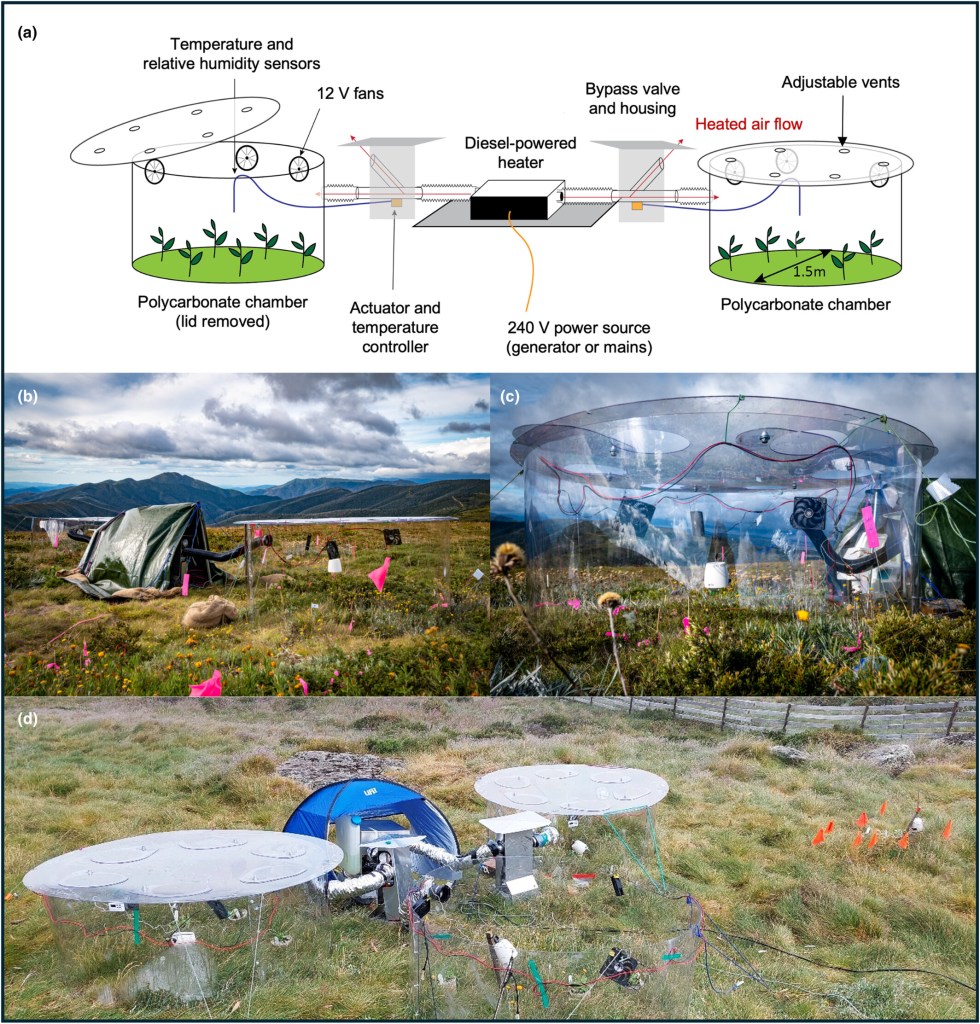
Effective heating chamber design to simulate acute heatwaves and night‐time warming for ecological communities under natural field conditions
Heatwaves are increasing in intensity, duration and frequency, but studying heatwaves in field conditions (in situ) remains challenging. Here authors designed and built equipment for simulating an extreme heat event under field conditions that combines passive warming in semi-enclosed chambers and active convective heating, using portable diesel heaters to supply warm air to 1.5 m diameter cylindrical chambers. The active heating systems can be programmed with target temperature profiles to heat day and night. The design can be applied to simulate an array of extreme heat scenarios on ecological communities, including night-time warming, daytime extremes, varying heat intensity, duration, event frequency, recovery period lengths and combinations thereof.
Beyond medicine: A proof of concept for synergy analysis in ecotoxicology
In medicinal drug research, the synergyfinder method has been widely adopted to characterise dose-dependent drug interactions, yet its application in other scientific fields remains unexplored. Here, as a proof of concept, authors demonstrate the suitability of this method for ecotoxicology and environmental research using a model pollinator, the buff-tailed bumblebee and two major environmental pollutants, namely copper and cadmium. This study is the first to extend the synergyfinder approach beyond medicinal applications and to supplement it with robust statistical hypothesis testing, providing a more rigorous framework for analysing chemical interactions in the face of a global pollution crisis.
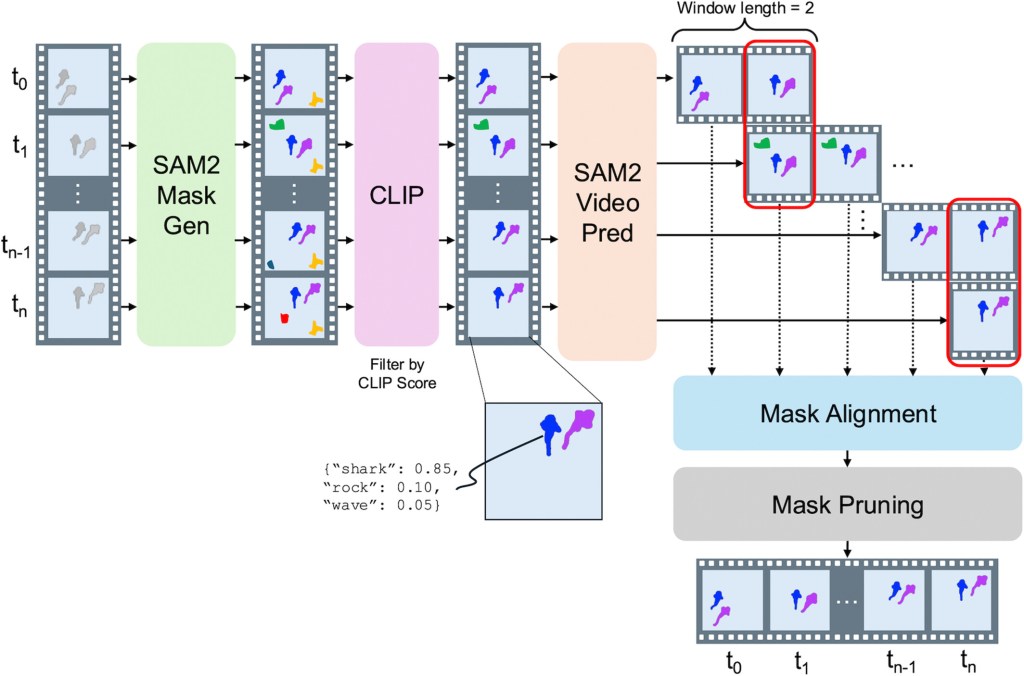
Zero‐shot shark tracking and biometrics from aerial imagery
Development of Machine Learning (ML) models for analysing marine animal aerial imagery has followed the classical paradigm of training, testing and deploying a new model for each dataset, requiring significant time, human effort and ML expertise. Here authors introduce Frame-Level Alignment and Tracking (FLAIR), which leverages the video understanding of Segment Anything Model 2 (SAM 2) and the vision-language capabilities of Contrastive Language-Image Pre-training (CLIP). FLAIR takes a drone video as input and outputs segmentation masks of the species of interest across the video. Notably, FLAIR leverages a zero-shot approach, eliminating the need for labelled data, training a new model or fine-tuning an existing model to generalize to other species.
Separating biological signal from methodological noise in home range estimates
Tracking technologies and analytical methods may introduce biases in home range size estimates. Here authors assessed these potential biases using simulated tracking data and published home range size estimates from empirical animal tracking studies, using hawksbill and green turtles as examples. Their results suggest that in many cases, hawksbill and green turtles have relatively small home ranges with this picture of their limited space use only emerging through high-accuracy tracking. Authors general conclusions likely apply broadly across taxa and will impact attempts to assess patterns of home range sizes recorded for individuals across studies in different regions.
Cover Image

Biodiversity information can be harnessed by capturing and analysing airborne environmental DNA (eDNA). However, previous airborne eDNA collection methods have relied on cumbersome equipment and/or electronic power supplies, significantly limiting the broad application of such sampling in the field. A new study demonstrates that simple electrostatic dust cloth-based passive samplers (one shown in the photo) can efficiently collect airborne eDNA and retrieve genetic signals from hundreds of plant and animal species in the surrounding area (Lin et al. 2025). Temporal sampling experiments further revealed rapid turnover of airborne eDNA composition, highlighting the samplers’ potential for real-time biomonitoring. This efficient, versatile, and cost-effective approach enables biomonitoring under challenging field conditions, at fine spatiotemporal resolutions, and across large-scale sampling ranges. Image credit: Sheng Li.
Read the full article here.

