


Getting your audio player ready…
Archaeologists excavating the ancient city of Sillyon in Turkey’s Antalya province have uncovered the remarkable tomb of Menodora, a wealthy Roman-era woman whose extraordinary philanthropy transformed her Mediterranean community during the second century AD. The discovery provides unprecedented insights into the role of female benefactors in ancient Roman society and reveals how personal tragedy inspired civic dedication.
The tomb was identified during excavations along Sillyon’s main street, where researchers discovered a group of elite burials in a distinctive location. Associate Professor Murat Taskiran of Pamukkale University, who directs the excavation, confirmed that the burial belonged to Menodora through comparison with a previously known 26-line inscription that detailed her extensive contributions to the city reports Türkiye Today.
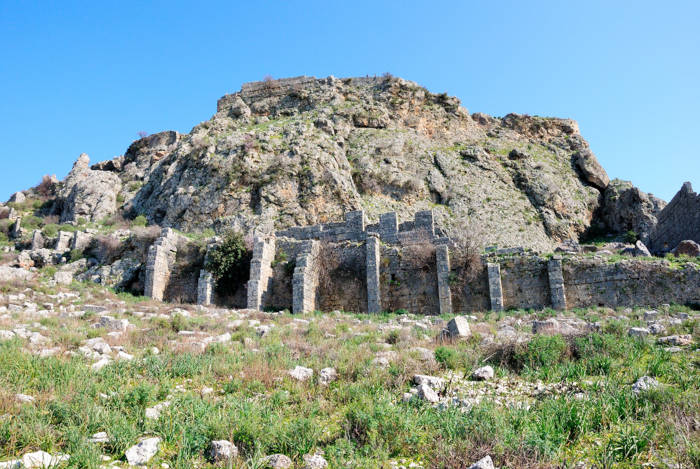
Ruins at Sillyon in the area where Menodora’s tomb has been identified. (Nigar/Adobe Stock)
From Personal Loss to Public Service
Menodora’s life was marked by profound personal tragedies that ultimately shaped her legacy of civic philanthropy. Historical records reveal she lost her father Megakles at an early age, followed by the deaths of her husband Apollonios and later her son. Rather than retreating from public life, these losses motivated her extraordinary dedication to Sillyon’s welfare.
“She put her pain aside, devoted herself to her city, and spent the rest of her life working for its revival,” explained Taskiran. This transformation from grieving widow to civic leader exemplifies the complex ways ancient women could wield influence and power within Roman society’s constraints.
Unprecedented Scale of Ancient Charity
The inscription documenting Menodora’s achievements reveals the staggering scope of her philanthropic activities. She held an official position equivalent to a city council leader and managed Sillyon’s gymnasium, a facility that combined education and athletics in the Greek tradition. Most remarkably, she established a foundation specifically dedicated to supporting children, demonstrating sophisticated understanding of institutional charity.
Menodora’s building projects were equally impressive, including the commissioning of monumental structures, temples, baths, and a stadium. Archaeologists estimate she spent approximately 300,000 denarii, an enormous sum in silver coins that establishes her as one of antiquity’s most generous female benefactors.
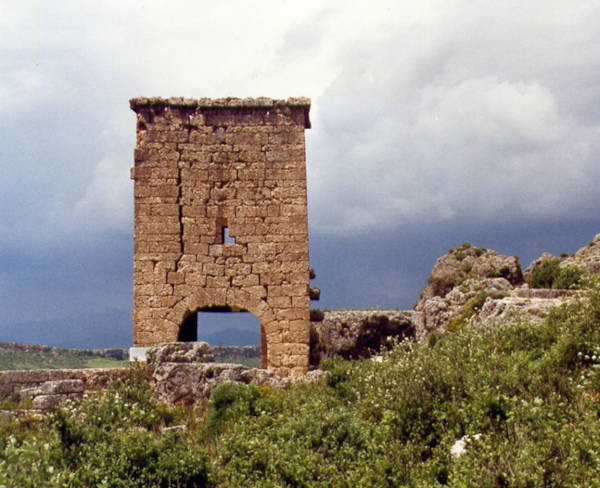
Ancient Roman city gate at Sillyon demonstrates the monumental architecture Menodora helped finance. (Klaus-Peter Simon/CC BY 3.0)
Transforming a City Through Vision
According to Taskiran, Menodora’s influence extended far beyond individual buildings or institutions. She fundamentally transformed Sillyon, a settlement built on challenging mountainous terrain, into a structured Mediterranean city that reflected Roman urban planning principles. Her vision demonstrated “how a city could be rebuilt through the vision and determination of a woman.”
This transformation was particularly remarkable given the physical constraints of Sillyon’s location. Perched atop steep hills approximately 20 miles (32 km) northeast of modern Antalya, the ancient city required considerable engineering expertise and financial resources to develop into a thriving urban center.
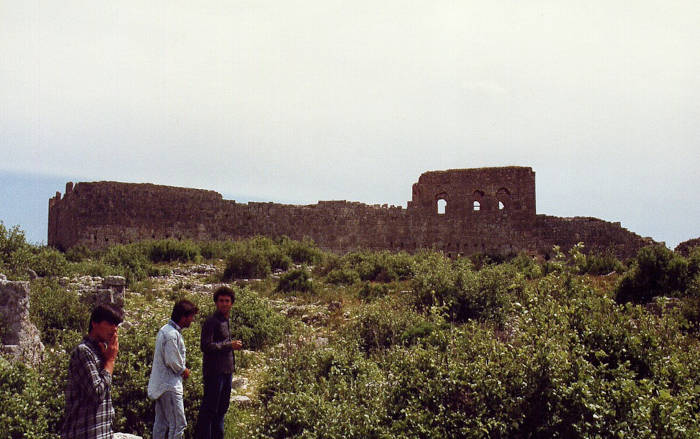
The acropolis area of ancient Sillyon. (Klaus-Peter Simon/CC BY 3.0)
Legacy of Female Leadership
The discovery of Menodora’s tomb provides tangible evidence of how wealthy women in the Roman Empire could exercise significant civic influence through strategic philanthropy. Her example challenges traditional narratives about women’s roles in antiquity and demonstrates the sophisticated networks of patronage that sustained Mediterranean cities.
Conservation and landscaping work around the newly discovered tomb continues, with plans to help future visitors understand how Roman elites were commemorated through elaborate burial monuments. The site joins Sillyon’s other remarkable features, including well-preserved city gates, bath complexes, and residential areas that chronicle the settlement’s evolution from Greek foundation to Roman municipality.
Top image: Sillyon ancient city, near where the tomb of Menodora has been found. Source: NeDduzen/Adobe Stock
By Gary Manners
References
Taskiran, M. 2025. Roman-era philanthropist Menodora’s tomb discovered in Antalya’s Sillyon. Available at: https://www.turkiyetoday.com/culture/roman-era-philanthropist-menodoras-tomb-discovered-in-antalyas-sillyon-3207766

