


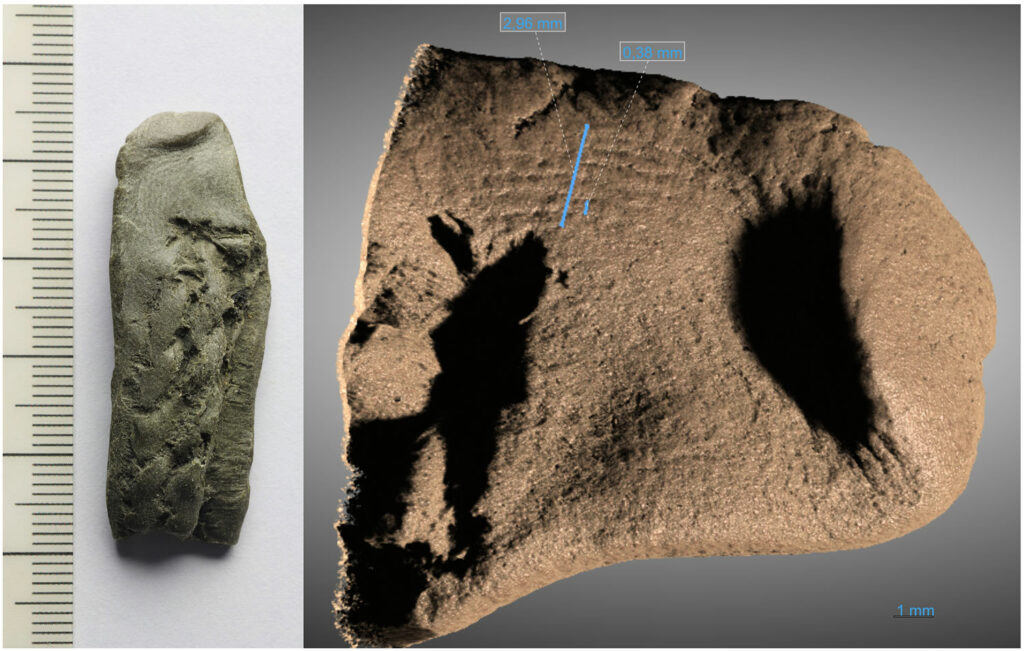
COPENHAGEN, DENMARK—According to a statement released by the Public Library of Science, a new study of the 2,400-year-old Hjortspring boat, discovered with a cache of weapons in the early twentieth century on Denmark’s island of Als, suggests that it may have been constructed in the Baltic Sea region. First, Mikael Fauvelle of Lund University and his colleagues radiocarbon dated cording and caulk found with the boat to the fourth or third century B.C. Then, they used gas chromatography and mass spectrometry to determine that the caulk had likely been made of animal fat and pine pitch. At the time, there were very few pine forests in Denmark, or in northern Germany, where some scholars had previously suggested the boat had been built. “We argue that this means the boat and its crew most likely came from further east along the shores of the Baltic Sea where pine forests were more abundant,” Fauvelle said. The examination also revealed a fingerprint on a tar fragment from the vessel. “It is great to have found a direct connection with one of the people who used this ancient boat,” Fauvelle added. The study concluded that the invaders who traveled to Als in the boat were likely defeated, and their vessel was sunk in a bog by the victors. Read the original scholarly article about this research in PLOS One. To read about Viking ship burials, go to “Setting Sail for Valhalla.”
The post New Thoughts on Denmark’s Ancient Hjortspring Boat appeared first on Archaeology Magazine.

