


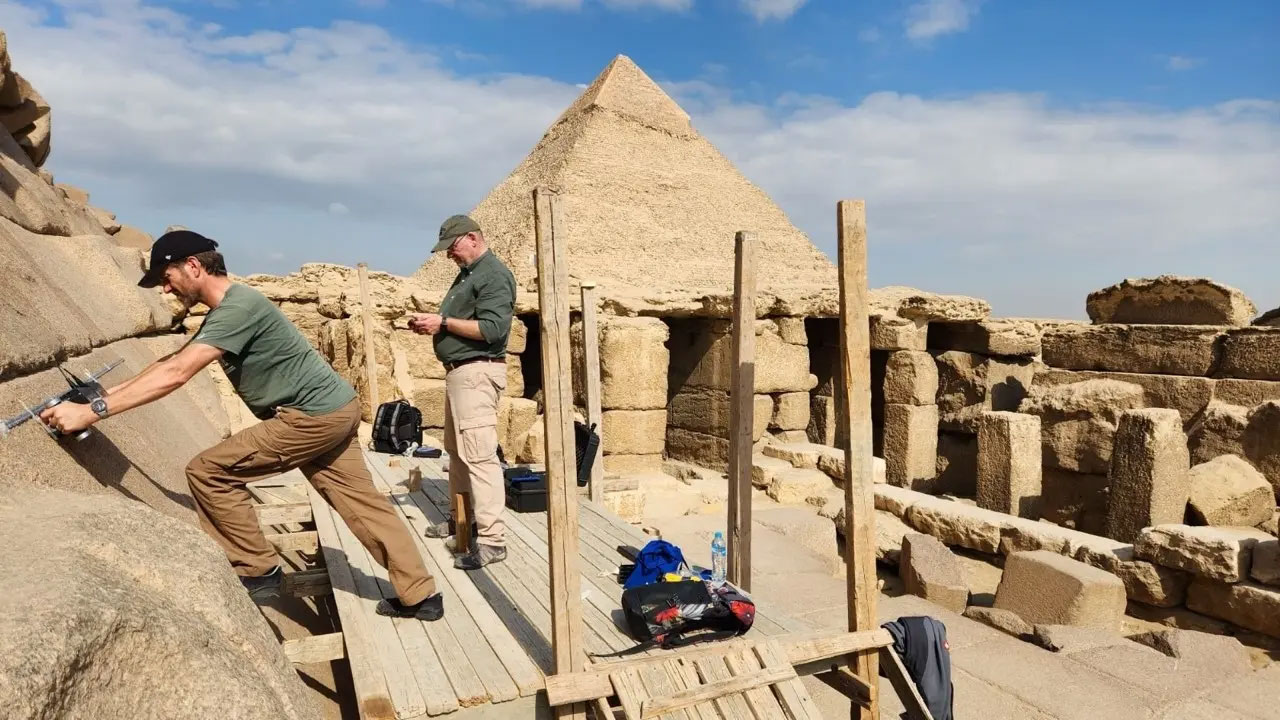
MUNICH, GERMANY—According to a statement released by the Technical University of Munich (TUM), the ScanPyramids research project, conducted by researchers from Cairo University and TUM, has identified two air-filled anomalies on the eastern side of the pyramid of the pharaoh Menkaure. Estimated to have been built some 4,500 years ago, the Menkaure Pyramid is the smallest of the three main pyramids on the Giza Plateau. The pyramid’s known entrance, on its northern side, features stone blocks that had been polished smooth. Similar blocks on the pyramid’s eastern side hinted that there may have once been an entrance there as well, so the team members used georadar, ultrasound, and electrical resistivity tomography to gather more information. When they combined the collected data, the researchers found the two anomalies, and determined that the first void is about four and a half feet behind the outer facade and measures about three feet tall and five feet wide. The second anomaly rests almost four feet behind the outer facade, and measures about three feet tall and a little more than two feet wide. “The testing methodology we developed allows very precise conclusions to be drawn about the nature of the pyramid’s interior without damaging the valuable structure,” said Christian Grosse of TUM. “The hypothesis of another entrance is very plausible, and our results take us a big step closer to confirming it.” Read the original scholarly article about this research in NDT & E International. To read about recent research on the plateau’s largest pyramid, go to “Secrets of the Seven Wonders: Great Pyramid of Giza.”
The post Scientists Scan Egypt’s Menkaure Pyramid with High-Tech Tools appeared first on Archaeology Magazine.

